Genesis Overview
Before the universe had a name, God’s Spirit hovered over the deep. With a word, light pierced the darkness, and from dust He shaped humanity in His image. Placed in a garden of communion, they soon hid in shame when trust gave way to fear.
The story widens from Eden’s exile to rising floodwaters, from Babel’s pride to scattered tongues across the earth. Violence multiplies, yet mercy refuses to retreat. Then it narrows to Abram, summoned into the unknown with nothing but a promise strong enough to outlast failure. Through Abraham’s family, striving, wandering, deceiving, and reconciling, God keeps threading blessing through broken lives. It ends with Joseph, once betrayed and forgotten, now forgiving and saving many. Genesis begins the world’s story, but more than that, it begins the story of hope.
The Author's Vision
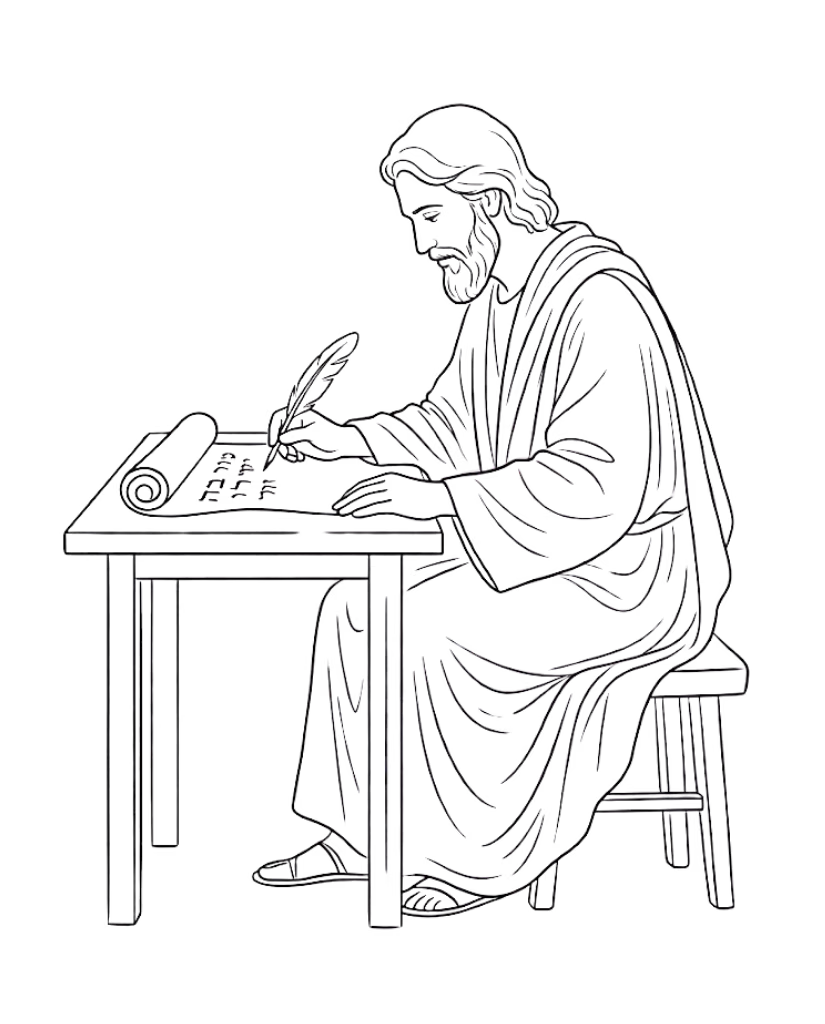
Moses wrote Genesis not as a historian preserving facts but as a shepherd passing on identity. His burden was theological: to show Israel that the God who just parted the sea had always been at work before the flood, before Abraham, before the first breath. Moses wanted his people to see themselves in this story. To understand that their God was not new. That His promises had been forming for generations. And that the same faithfulness that had carried Noah through water and Joseph through prison would carry them through whatever came next.
The Audience of Book
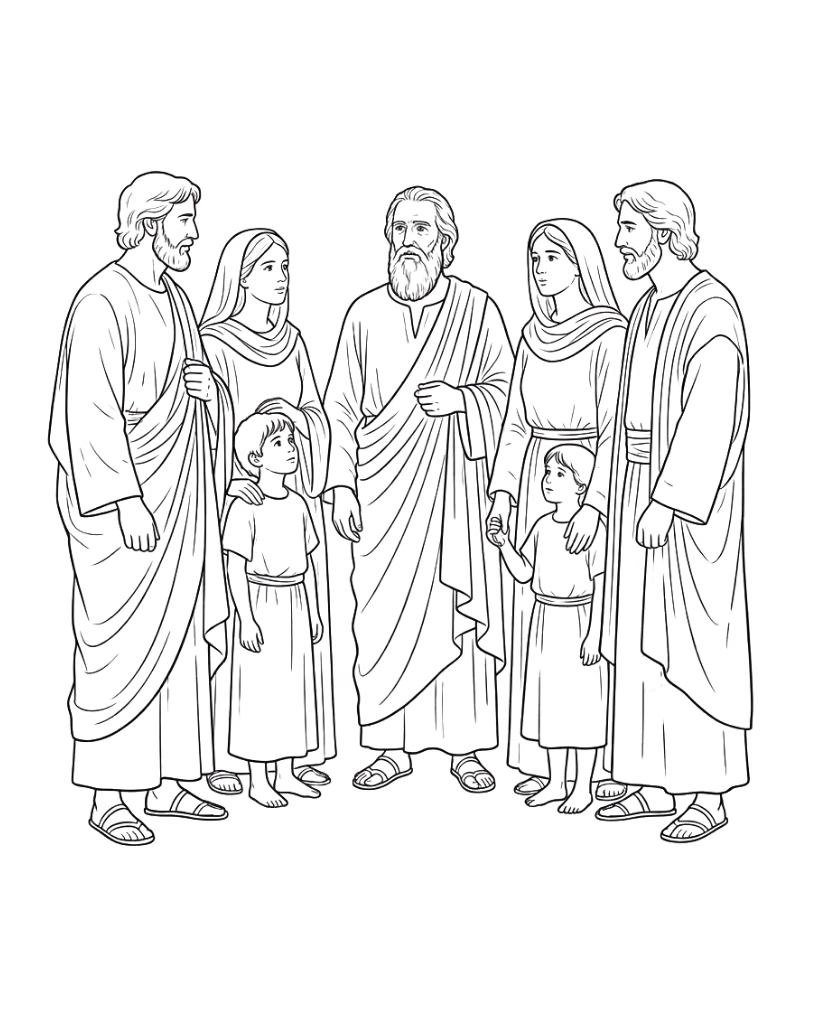
Genesis was written primarily for the nation of Israel, a people freshly delivered from Egypt who needed to understand where they came from and why they mattered. They were standing at the edge of a promised land they had never seen, carrying a covenant they had not yet fully understood. Genesis answered the questions before they could fully form: Who made the world? Who are we? Why does God care about us? It was a foundation given to a people who needed roots before they could grow.
Key Themes of Genesis
Creation & The Fall (1–3)
God speaks the world into existence with order, beauty, and intention, then shapes humanity in His own image and breathes life into them. Everything is good. But trust breaks in the garden, and with it, everything changes. Sin enters, shame takes root, and the distance between God and humanity opens up for the first time. Yet even in the moment of judgment, God plants the first seed of hope and a promise that the wound sin caused will one day be healed.
The Flood & Nations (4–11)
What begins with one act of disobedience spreads. Violence multiplies, corruption runs deep, and humanity drifts further from the life God designed. God responds with the Flood a judgment that is also a rescue. Noah and his family are carried through the waters, and a rainbow seals God’s promise of mercy. But pride rises again at Babel, and God scatters the nations, reminding every generation that no human tower can reach what only His grace can give.
Abraham Covenant (12–25)
Out of the scattered nations, God calls one man. Abram leaves everything familiar on the strength of a promise he cannot yet see. God seals a covenant with him land, descendants, and blessing for all the families of the earth. The road is long and full of detours. Faith stumbles, laughter greets impossible news, and a mountain called Moriah tests everything Abraham has. Yet God provides. Every trial deepens the covenant rather than breaking it, showing that what God begins, He intends to finish.
Abraham Covenant (12–25)
The promise passes to Isaac and then to Jacob a man whose story is tangled with deception, rivalry, and restless striving. He wrestles in the dark with God Himself and walks away with both a limp and a new name: Israel. Through his twelve sons, a family becomes the outline of a nation. The covenant is not carried by perfect people. It is carried by God, who keeps threading His purposes through the most unlikely and broken hands.
The Twelve Tribes (26–36)
Joseph is sold by his own brothers, falsely accused, and forgotten in prison. Every chapter of his life seems to close the wrong way. But God is working beneath every surface. From the pit to the palace, Joseph rises to become second only to Pharaoh, not by chasing power but by remaining faithful in obscurity. When famine drives his brothers to Egypt, the brother they discarded becomes the one who saves them. What they intended for harm, God had long been turning toward rescue.
The Promise Continues (48–50)
As Genesis draws to a close, Jacob gathers his sons and speaks a blessing over each one, pointing forward to what each tribe will carry. Judah receives the promise of royalty a scepter that will not depart until the One it belongs to arrives. Joseph forgives fully and asks that his bones one day be taken home, a quiet act of faith in a return he will not live to see. The book ends not with resolution but with anticipation. The promise is still moving. The story is far from over.
What We Can Learn Form This Book
About God
- God creates with intention, order, and love.
- God pursues humanity even after failure.
- God keeps His promises despite human weakness.
- God brings blessing out of brokenness.
- God writes long-term stories, not quick fixes.
About Humanity
- Humans are made with purpose and dignity.
- We struggle with identity, fear, shame, jealousy, and control.
- Our choices carry generational impact.
- Humanity breaks trust, yet longs to return to God.
- Even flawed people can walk with God by faith.
About God’s Plan
- The promise of a Redeemer begins immediately after the Fall.
- God chooses one family to bless all nations.
- Covenant becomes the foundation for God’s future work.
- God’s plan continues through unexpected people and hard seasons.
- Redemption, not destruction, is God’s direction for humanity.
Key Verses of Genesis
From the Book of Genesis, these verses reveal God as Creator, Redeemer, and sovereign Lord, assuring us today of human worth, divine purpose, faithful promises, provision, and hope amid suffering and evil.
Reflection of Jesus From This Book
From the beginning, God sovereignly designed a perfect redemption plan, unfolding through history and culminating in Jesus Christ, revealing His intentional love, wisdom, and eternal purpose to save humanity.
Genesis 1:1–3 – The Word through Creation
John 1:1–3; Colossians 1:16 – Through Him all things were created, displaying divine authority, wisdom, and power active from the very beginning.
Genesis 3:15 – The Seed of the Woman
Galatians 4:4; 1 John 3:8 – He is the promised offspring who crushes the serpent, securing victory over sin, Satan, and death.
Genesis 6:14; 7:16 – The Ark of Refuge
1 Peter 3:20–21 – As the Ark preserved life from judgment, Christ provides salvation and safety for all who trust Him.
Genesis 12:2–3 – Abraham’s Promised Offspring
Galatians 3:16 – Through Abraham’s lineage, Jesus brings blessing and redemption to every nation and family on earth.
Genesis 22:8 – The True Lamb Provided
John 1:29 – Like Isaac’s substitute, Jesus becomes God’s provided Lamb, sacrificed for humanity’s sin and restoration.
Genesis 37:28; 50:20 – The Greater Joseph
Acts 7:9–10; Romans 8:28 – Rejected and betrayed, yet exalted, He forgives and saves many, turning human evil into divine good.
God has faithfully fulfilled His redemptive promises through Christ’s life, death, and resurrection, and continues accomplishing His saving purposes today, bringing hope, restoration, and eternal life to all believers.
Practical Applications for This Book
- Trust God’s timing – even when His promises feel slow or silent. Abraham waited decades. So did Joseph. So might you.
- Guard your heart against jealousy, pride, and fear – Genesis shows us how quickly those forces unravel relationships and destinies.
- Return quickly when you fail – God is not waiting with arms crossed. He is walking toward you.
- Live with generational vision – your faithfulness today plants seeds for people who haven’t been born yet.
- Believe that pain has purpose – Joseph’s pit, prison, and patience all led somewhere. So does yours.
God begins good things, even in the places where everything feels empty.
Genesis is the sound of God taking chaos and calling it something.
It is the story of beginnings, of creation, of family, of faith, of failure, of grace extended across generations that did not deserve it. Every chapter carries a quiet undercurrent: God starts things He intends to finish.
This is not just ancient history. It is the beginning of your story with God, and the assurance that what He starts in you, He will not abandon.
3 Stories of This Book
Reflection on Genesis
“The Spirit of God was hovering over the face of the waters.” – Genesis 1:2
Maybe you are in a season right now where everything inside feels like static.
No clarity. No direction. My thoughts were loud, my future was blank, and the silence from heaven felt louder than anything else.
I opened Genesis 1 almost out of desperation. And I read this:
The earth was formless. Empty. Dark. And yet – the Spirit of God was hovering.
Not rushing. Not forcing. Just – present. Over the chaos. Waiting to create.
Something broke open in me at that moment.
God was not intimidated by the disorder I was carrying. He was not standing at a distance, waiting for me to clean myself up before He could work. He was already there hovering over the very mess I was so ashamed of.
My chaos was not the obstacle to God’s work. It was the starting point.
Genesis became personal that day. Not a history lesson a mirror. And a beginning.
How Genesis Connects to The Rest of Scripture
Genesis is not a standalone book. It is the root system beneath everything else in the Bible.
- Every covenant God makes in Scripture with Moses, David, the Church traces back to the covenant with Abraham in Genesis 12.
- Every sacrificial lamb in Exodus and Leviticus echoes the lamb God provided on the mountain in Genesis 22.
- Every prophecy about a coming Messiah carries the seed of Genesis 3:15 the first promise that evil would one day be defeated.
- Jesus Himself quotes Genesis in His teaching. Paul builds his theology of grace on Abraham’s story. Revelation closes the loop on Eden.
When you understand Genesis, you understand the language the rest of the Bible is speaking. The story that begins here does not end until the final chapter of Revelation and even then, it opens into something greater.
Living Genesis in Action
Choose one area of your life that feels chaotic, dark, or uncertain.
“Let there be light.” Genesis 1:3
Don’t just say the words. Expect something to shift.
God hovered over the first darkness. He hovers over yours.
You've Just Taken Your First Step.
Genesis is Book 1 of 66. Each one has something to say to you.
The same God who hovered over the deep in the beginning is at work in your story right now.
Keep reading. Keep showing up. Keep trusting the One who began this.