Leviticus Overview
Israel is not moving yet. They are camped at Sinai, the tabernacle freshly built, and God is speaking from inside it. After the drama of Exodus, Leviticus slows everything down and asks the question underneath all the others: now that God lives among you, how do you actually live near Him?
The answer is detailed and intentional. Five offerings. A priesthood set apart. Purity laws for food, bodies, and homes. A Day of Atonement that resets the nation before God once a year. A sacred calendar that turns ordinary seasons into acts of worship.
The book that feels most distant to modern readers is the one that takes holiness most seriously. It assumes God is genuinely holy, sin genuinely costs something, and a people who belong to Him need to look different. Every law in Leviticus is God showing Israel what it means, in practice, to be His.
The Author's Vision
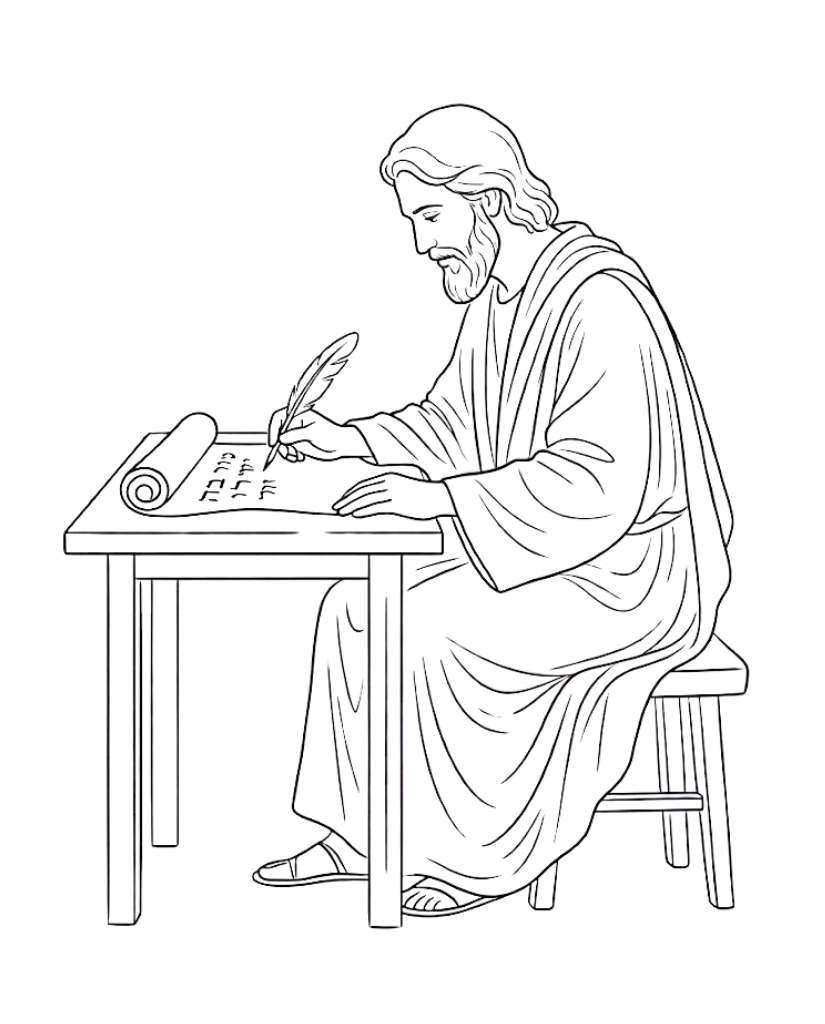
Moses wrote Leviticus not as a legal code for its own sake but as a relational framework. Behind every regulation is the same truth: God is holy, and He wants His people to reflect that holiness in how they eat, work, worship, and treat the poor. Moses understood that holiness was not a spiritual category alone. It touched everything. His goal was a people whose entire way of life declared they belonged to someone completely unlike every god their neighbours worshipped.
The Audience of Book
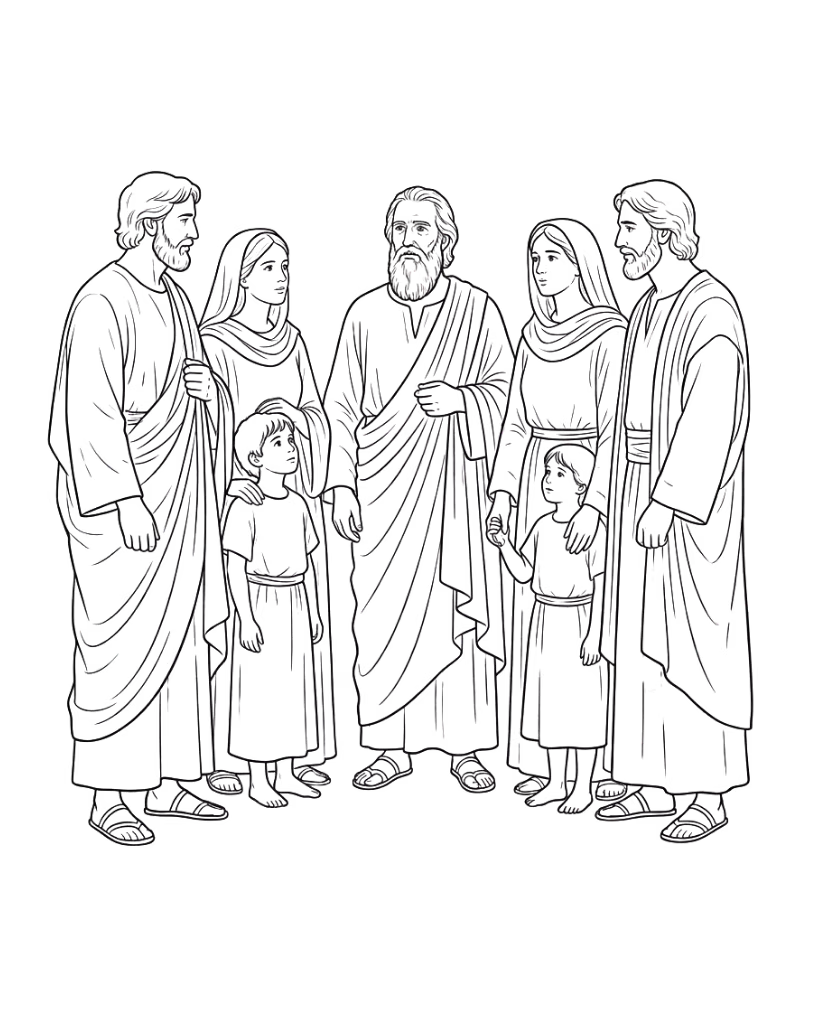
Leviticus was written for a people just rescued with no idea how to function as a covenant nation. They came from Egypt, shaped by four hundred years of a culture that worshipped idols and appeased gods. Now they belonged to a God who was holy, genuinely present, and serious about how He was approached. These laws were not given to burden them. They were given to form them into something they had never been before.
Key Themes of Leviticus
Laws of Sacrifice (1-7)
Before Israel could draw near to God, sin had to be answered. God gives five offerings, each addressing a different dimension of the broken relationship between a holy God and a failing people. Access to God costs something. And God Himself designs the way.
Priesthood and Purity (8-10)
Aaron and his sons are set apart through careful ceremony to serve as priests. When Nadab and Abihu offer fire God had not commanded, they are struck dead. Worship is not approached casually or on your own terms. Proximity to His holiness is handled with reverence.
Laws on Purity (11-15)
Clean and unclean runs through Leviticus like a thread. These were not arbitrary hygiene rules. They were daily reminders that God’s people were distinct, that holiness had boundaries, and that being near God required ongoing attentiveness to how you lived.
Laws on Purity (11-15)
Once a year everything stopped. The high priest entered the Most Holy Place with sacrificial blood. A second goat carried the sins of the people into the wilderness. Gone. The holiest day on Israel’s calendar, when a year’s failure was formally dealt with.
The Day of Atonement (16-17)
Holiness does not stay inside the tabernacle. God commands justice for the poor, fair wages for workers, honest scales, and care for foreigners. At the centre is a verse Jesus would later call one of the two greatest commands: love your neighbour as yourself.
Covenant Blessings (23-27)
God builds a calendar for His people. Seven feasts mark the year with remembrance, celebration, and rest. A Sabbath year every seven years and a Jubilee every fifty where debts are cancelled and slaves go free. The rhythm God gives is generous. You are not defined by your work.
What We Can Learn Form This Book
About God
- God is holy in a way that is unlike anything else.
- God takes sin seriously because He takes relationship seriously.
- God provides the very means of atonement He requires.
- God cares about every area of life, not just the obviously spiritual.
- God is generous. The Jubilee and the feasts are gifts, not obligations.
About Humanity
- We need a mediator to approach a holy God.
- Sin has real weight and cannot simply be overlooked.
- Holiness is not achieved once. It is walked out every single day.
- How we treat the vulnerable reveals what we actually believe about God.
- Ritual without heart is not what God wants, but heart without form drifts.
About God’s Plan
- Every sacrifice points forward to the one perfect sacrifice.
- The Day of Atonement is the clearest Old Testament picture of substitution.
- The priestly system foreshadows Christ as the ultimate High Priest.
- The feasts map the entire arc of salvation from deliverance to final rest.
- Holiness was always meant to be the mark of God’s people in every generation.
Key Verses of Leviticus
From the Book of Leviticus, these verses reveal God as holy, present, and relentlessly committed to a people who reflect His character in every part of ordinary life.
Reflection of Jesus From This Book
From the very first offering to the scapegoat sent into the wilderness, Leviticus is a detailed portrait of what Christ would one day accomplish, once and for all.
Leviticus 1-7 - The Five Offerings
Hebrews 10:10-12 – Every offering Israel brought was a rehearsal. Jesus fulfilled them all in one act, the perfect sacrifice that covers devotion, fellowship, sin, and guilt completely.
Leviticus 8-9 - The High Priest
Hebrews 4:14-15 – Aaron stood between God and the people. Jesus is the High Priest who not only represents us before God but carries our case with His own blood, permanently.
Leviticus 16 - The Day of Atonement
Hebrews 9:11-12 – The high priest entered once a year with animal blood. Jesus entered once for all with His own, achieving not a yearly covering but an eternal redemption.
Leviticus 16:21-22 - The Scapegoat
Isaiah 53:6; 2 Corinthians 5:21 – The scapegoat carried Israel’s sins into the wilderness and did not return. Jesus bore ours outside the city walls, carrying guilt away completely.
Leviticus 19:18 - Love Your Neighbour
Matthew 22:39; Romans 13:10 – Jesus lifted this command from the middle of Leviticus and placed it alongside loving God as the foundation of everything the law requires.
Leviticus 25 - The Year of Jubilee
Luke 4:18-19 – When Jesus stood in the synagogue and read from Isaiah, He was announcing the ultimate Jubilee. Debts cancelled. Captives freed. The year of the Lord, finally arrived.
God has faithfully fulfilled every shadow in Leviticus through Christ’s life, death, and resurrection, continuing His work of making His people holy today.
Practical Applications for This Book
- Holiness is not optional – God did not suggest His people be set apart. The question is not whether to pursue holiness but what that looks like in your specific life today.
- Take sin seriously before it takes you seriously – Leviticus treats sin as something that breaks relationship and requires honest dealing. Confession is not weakness. It is the path back.
- How you treat people is a form of worship – Fair wages, care for the poor, honesty in business sit right next to commands about sacrifice. God does not separate them. Neither should you.
- Rest is obedience – The Sabbath, the sabbath year, the Jubilee. God builds rest into time because He knows what relentless striving does to a person. Stopping is an act of trust.
- You already have a High Priest – You do not need to clean yourself up before coming to God. Jesus has already entered the Most Holy Place on your behalf. Come as you are.
Leviticus is the sound of God leaning in close and saying: this matters.
Not just the sacrifices and the feasts. The food on your table, how you treat the person who cannot repay you, what you say when no one is listening. All of it belongs to Him.
This is not just ancient law. It is the beginning of understanding that God does not want a corner of your life. He wants to walk through all of it.
3 Stories of This Book
Reflection on Leviticus
“You shall be holy, for I the LORD your God am holy.” – Leviticus 19:2
Maybe holiness has always felt like a word that belonged to someone else.
To the person who has it all together. Not to someone with your history, your habits, the gap between who you want to be and who you actually are on an ordinary morning.
I remember reading Leviticus and feeling the weight of that gap. The offerings, the laws, the precision of it all. It felt like the standard being raised, not lowered.
And then I noticed something.
God gave these instructions to people freshly out of Egypt. People shaped by four hundred years of a culture built around other gods. People who, weeks after being rescued, built a golden calf because they got nervous waiting.
He looked at those people and said: be holy, for I am holy.
Not when you have earned it. Not after you fix the obvious things. Now. Here.
Because holiness in Leviticus is not a status you achieve. It is a direction you face. The daily turning, the returning, the bringing of what you have to God and letting Him deal with the rest.
The offerings existed for people who did not have it together. God built the whole system for failing people who still wanted to be close. That has not changed.
How Leviticus Connects to The Rest of Scripture
Leviticus is the theological engine underneath much of the New Testament. Pull it out and large sections lose their framework entirely.
- The book of Hebrews is essentially a commentary on Leviticus, showing how Jesus fulfils and surpasses the priesthood, the sacrifices, and the Day of Atonement once for all.
- “Without the shedding of blood there is no forgiveness” (Hebrews 9:22) comes directly from the logic of Leviticus 17:11. The cross makes no sense without it.
- “Love your neighbour as yourself” (Leviticus 19:18) is quoted by Jesus, Paul, and James as a summary of the entire moral law, lifted straight from these pages.
- The Year of Jubilee (Leviticus 25) becomes the lens through which Jesus announces His ministry in Luke 4, claiming He is everything Jubilee was pointing toward.
When you read Leviticus slowly, you are reading the vocabulary the New Testament will speak again and again. Every shadow here has a face, and that face is Christ.
Living Leviticus in Action
Pick one area of your life you have kept separate from God.
Bring it to Him this week. Not after you fix it first.
“I will walk among you and be your God, and you shall be My people.” – Leviticus 26:12
He does not want one room. He wants to walk through all of it.
You've Just Taken Your First Step.
Leviticus is Book 3 of 66. Each one has something to say to you.
The same God who designed a way for failing people to draw near is at work in your story right now.
Keep reading. Keep showing up. Keep trusting the One who made the way.