Deuteronomy Overview
Moses is old. The Promised Land is visible from where he stands but he will never set foot in it. So he gathers Israel on the plains of Moab and does the only thing left to do. He remembers. He rehearses forty years of wilderness, forty years of God’s faithfulness, forty years of Israel’s failure, and he says: do not forget what you have seen.
Deuteronomy is Moses’ farewell. He restates the law, renews the covenant, and calls the nation to love God with everything they have. The Shema sits at the heart of it: Hear, O Israel. The Lord our God, the Lord is one. Love Him with all your heart, soul, and strength. Everything else flows from that.
Then Moses climbs the mountain alone. He sees the land from a distance. And God buries him in a valley no one has found since. Joshua takes the lead. A generation stands ready. And the promise that began with Abraham is one river crossing away.
The Author's Vision
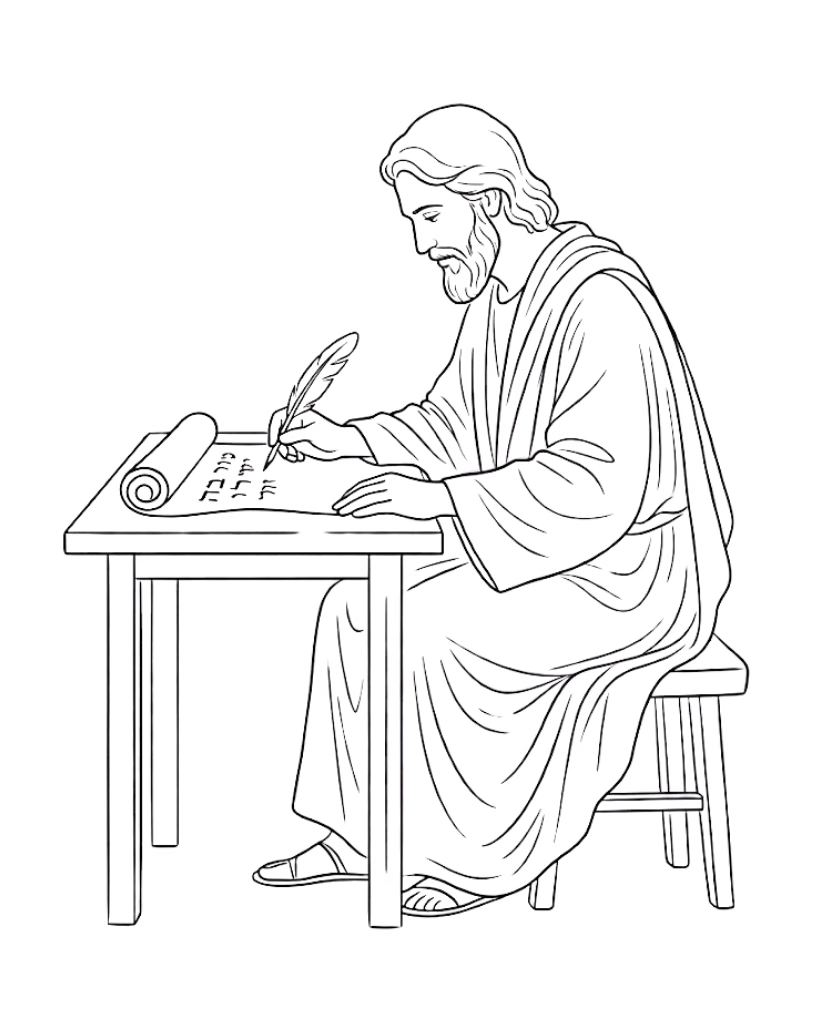
Moses writes as a man standing at the end. He has led this people for forty years. He has interceded for them, argued with God on their behalf, and watched an entire generation die in the wilderness because they would not trust. Now he stands at the edge of everything he gave his life to reach, knowing he will not cross. There is no bitterness in his words. There is urgency. There is love. There is a man pouring everything he knows into the people he is leaving behind, praying it will be enough to carry them when he is gone.
The Audience of Book
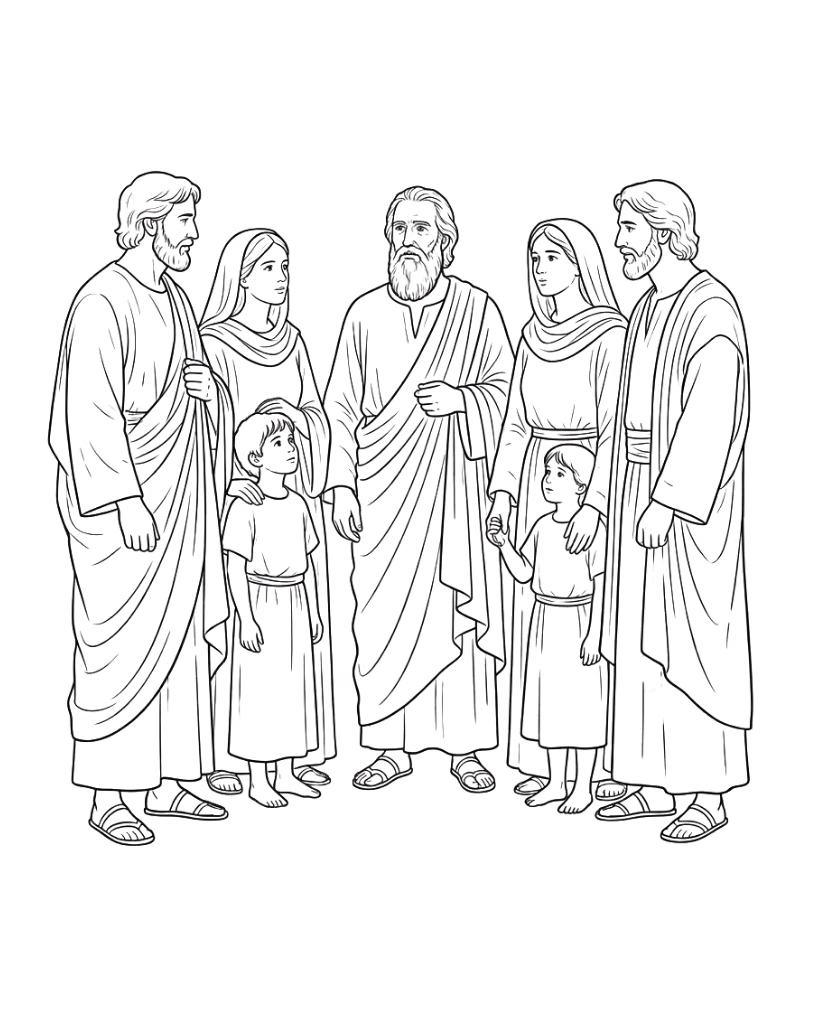
Deuteronomy was written for a generation who had grown up in the desert and never known anything else. They had heard the stories of Egypt and Sinai from their parents but they had not lived them. Moses knew that what you have not experienced yourself is easy to forget and easier to dismiss. He was not just handing them a law code. He was handing them a memory, a way of seeing God, themselves, and the land they were about to enter that would shape everything they did once they got there.
Key Themes of Deuteronomy
Israel's Journey (Deuteronomy 1-4)
Moses recounts the road from Sinai to Moab, not as history but as warning. Every failure is named. Every act of mercy is named beside it. Remember what happened and remember who brought you through it anyway.
Greatest Command (Deuteronomy 5-11)
The Ten Commandments are restated and the Shema is given. Love God with all your heart, soul, and strength. This is not the first commandment among many. It is the one from which all others grow.
Laws for Worship (Deuteronomy 12-18)
God sets precise guidelines for how Israel is to worship, lead, and do justice. A future prophet like Moses is promised. The law is not a burden. It is the shape of a life lived close to God.
Laws for Worship (Deuteronomy 12-18)
Life and death are placed before the people. Obedience brings blessing. Rebellion brings consequence. Moses prophesies exile and return, and calls Israel to choose life by choosing God.
Blessings, Curses (Deuteronomy 19-30)
Moses commissions Joshua, writes the law, and teaches Israel a song to remember when they drift. Then he blesses each tribe, speaking identity and future over every one of them before he goes.
Death of Moses (Deuteronomy 34)
Moses climbs Mount Nebo alone, sees the Promised Land spread out before him, and dies. God buries him. No prophet like him arose again in Israel until One greater came.
What We Can Learn Form This Book
About God
- God is one, and He demands the whole heart, not a portion of it.
- God keeps His promises across generations even when His people do not.
- God disciplines those He loves and takes disobedience seriously.
- God provides the law not to restrict life but to protect and shape it.
- God honours faithful leadership even when it does not receive the reward it deserved.
About Humanity
- We forget quickly, especially when life gets comfortable and the wilderness is behind us.
- Our choices carry consequences that reach further than we can see.
- We need regular, deliberate remembering to stay faithful over the long haul.
- Teaching the next generation is not optional. It is the work of every faithful person.
- Obedience is not an external performance. It begins in the heart.
About God’s Plan
- We forget quickly, especially when life gets comfortable and the wilderness is behind us.
- Our choices carry consequences that reach further than we can see.
- We need regular, deliberate remembering to stay faithful over the long haul.
- Teaching the next generation is not optional. It is the work of every faithful person.
- Obedience is not an external performance. It begins in the heart.
Key Verses of Deuteronomy
From Deuteronomy, these verses reveal a God who calls for wholehearted love, provides His word as daily sustenance, and promises a greater deliverer, reminding every generation that the choice to follow Him is always still open.
Reflection of Jesus From This Book
Deuteronomy points to Christ more directly than almost any other book in the Pentateuch, shaping the very words Jesus quoted in the wilderness and the promise He came to fulfill.
Deuteronomy 6:4-5 - The Greatest Command
Mark 12:29-30 – Jesus declares this the first and greatest commandment, showing that love for God is the foundation on which everything He taught is built.
Deuteronomy 8:3 - Bread from Heaven
Matthew 4:4 – Jesus quotes this directly when tempted in the wilderness, claiming the same truth Moses gave Israel: life comes from God’s word, not from what we can secure for ourselves.
Deuteronomy 18:15 - The Prophet Like Moses
Acts 3:22 – Peter declares this prophecy fulfilled in Jesus, the greater Moses who leads not into a geographic land but into eternal life with God.
Deuteronomy 21:23 - Cursed is He Who Hangs on a Tree
Galatians 3:13 – Paul shows that Jesus became a curse for us, taking on Himself what the law declared so that we might receive what the law could never give.
Deuteronomy 30:6 - The Circumcised Heart
Romans 2:29 – Moses promises a day when God will circumcise the heart. That day arrives in Christ, who by His Spirit does what the law alone could never accomplish.
Deuteronomy 34:10 - No Prophet Like Moses
Hebrews 3:3 – The book closes acknowledging no prophet like Moses arose. The writer of Hebrews answers that silence: Jesus has been counted worthy of more glory than Moses.
God plants in Deuteronomy a longing that the law itself cannot satisfy, a longing for a perfect prophet, a changed heart, and a life that obedience alone could never produce. Jesus is the answer to every one of those longings.
Practical Applications for This Book
- Remember deliberately – Build habits of remembrance before comfort steals your memory of what God did in the hard seasons.
- Teach in the ordinary moments – Faith is passed on at the dinner table and on the school run, not only in formal settings.
- Choose life today – Not once, dramatically. Daily, quietly, in the direction you lean when no one is watching.
- Feed your spiritual hunger – Your soul needs the word as much as your body needs food. Give it the same attention.
- Finish well – Moses never crossed the Jordan. But he finished well. How you hand things over matters as much as how you carried them.
"God does not just give you the law. He stands at the border and says: choose life."
Deuteronomy is the sound of a man pouring everything he has into people he loves before he has to let them go.
Moses will not cross the Jordan. He knows it. And instead of grieving what he cannot have, he gives everything he still can. Forty years of walking with God, distilled into one final address. Remember. Love. Choose. Teach your children. Do not forget where you came from.
That is the gift of this book. Not the law. The love behind it. And the reminder that the choice is always still in front of you.
3 Stories of This Book
Reflection on Deuteronomy
“I have set before you life and death, blessing and cursing; therefore choose life.” – Deuteronomy 30:19
Maybe you are standing at a border right now.
Not a geographical one. The kind where one season is ending and another is waiting. The old chapter is closing. The new one has not been named yet.
God does not complicate the moment. He never has. He simply sets life before you and says choose. Not once. Every day.
Sometimes choosing life means trusting when the evidence is thin. Forgiving when the wound is still fresh. Obeying when no one is watching and the cost is real.
Whatever border you are standing at today, the invitation has not changed. Choose life. And when tomorrow comes, choose it again.
God is already waiting on the other side.
How Deuteronomy Connects to The Rest of Scripture
Deuteronomy is the theological foundation of the Old Testament, and its fingerprints are on almost every book that follows it.
- Jesus quotes Deuteronomy three times in the wilderness – In Matthew 4, every response to Satan’s temptation comes directly from Deuteronomy. It was the book Jesus trusted when everything was on the line.
- The Shema becomes the heartbeat of all Jewish and Christian worship – Deuteronomy 6:4-5 runs through the Psalms, the Prophets, and the New Testament as the irreducible centre of what it means to love God.
- The promised prophet of Deuteronomy 18 shapes all Messianic expectation – Every prophet who came after Moses was measured against this promise. Jesus is the only one who fully fits.
- Paul builds his theology of grace on Deuteronomy’s failure – Israel could not keep the law. Deuteronomy names that honestly. Paul’s argument in Galatians and Romans begins exactly there.
When you understand Deuteronomy, you understand why the law was never the destination. It was always pointing to the One who would do what law alone could never accomplish.
Living Deuteronomy in Action
Identify one border you are standing at right now, one place where a new season is beginning and you need to decide what you will carry into it.
“I have set before you life and death, blessing and cursing; therefore choose life.” – Deuteronomy 30:19
The God who stood with Moses at the border stands with you at yours.
You've Just Taken Your First Step.
Deuteronomy is Book 5 of 66. Each one has something to say to you.
The same God who walked forty years of wilderness with Israel walks every season with you.
Keep choosing. Keep trusting. Life is still set before you.